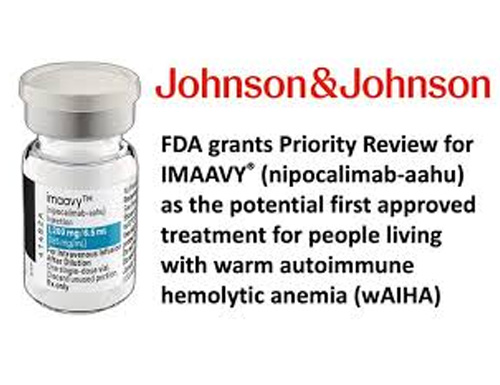
The randomized, placebo-controlled trial demonstrated approximately three times as many patients achieved durable Hgb levels versus placebo by 24 weeks. Overall, patients treated with this dose of IMAAVY showed a mean Hgb improvement of at least 1g/dL as early as Week 1.1,c
To be presented at the European Hematology Association (EHA) 2026 Congress, these results mark an important step forward for people living with wAIHA, a rare, life-threatening condition for which patients currently have no U.S. Food and Drug Administration (FDA)-approved treatment options.
"These data from the Phase 2/3 ENERGY study showed the rapid onset of effect and durable improvement in anemia which occurs by targeting the autoantibody-mediated destruction of red blood cells in people living with warm autoimmune hemolytic anemia," said Bruno Fattizzo, M.D., Assistant Professor at the Department of Oncology and Hematology-Oncology, University of Milan, Italy.g "Achieving hemoglobin improvements this quickly and at this scale is important in clinical practice, as it could help improve the debilitating fatigue that people living with warm autoimmune hemolytic anemia experience."
Key findings from the Phase 2/3 ENERGY study
The ENERGY study compared IMAAVY to placebo in achieving the primary endpoint of durable Hgb improvement, which was defined as achieving the following stringent criteria1:
- An increase from baseline in Hgb ≥2 g/dL
- Hgb concentration ≥10 g/dL
- For at least three visits (≥28 days, where criteria was met, starting by Week 16)
- Without the need for rescue therapy or changes to background medications for wAIHA
In the 30 mg/kg treatment group, a mean increase of 1 g/dL in Hgb was observed at Week 1, compared to no change in the placebo group.c In wAIHA, treatment also aims to maintain Hgb ≥10 g/dL and achieve a ≥2 g/dL increase from baseline and nearly two-thirds of patients achieved both of these targets by Week 24.
IMAAVY was also associated with improvements in fatigued and reduction in steroid usef, two key secondary endpoints. Changes in patient-reported fatigue were observed as early as Week 2 and sustained throughout the 24-week treatment period.
In the study, IMAAVY demonstrated a safety profile consistent with the established safety profile of IMAAVY in the approved indication of generalized myasthenia gravis. The most common adverse reactions (≥10%) in patients with wAIHA treated with IMAAVY were peripheral edema, diarrhea and fever.
By targeting the pathogenic IgG autoantibodies that lead to red blood cell destruction in wAIHA, IMAAVY is designed to utilize a differentiated, immunoselective approach, preserving underlying key humoral immune functions in a condition where many patients currently can only rely on unapproved therapies, including corticosteroids and broad immunosuppressants.
"In the first large, placebo-controlled trial of its kind, IMAAVY delivered durable improvements in hemoglobin levels and showed no new safety signals, in a disease with no FDA-approved therapies," said Leonard L. Dragone, M.D., Ph.D., Disease Area Leader, Autoantibody and Rheumatology, Johnson & Johnson. "This immunoselective approach targets the underlying autoantibodies driving disease while preserving key immune functions, which is important for people living with this disease who frequently suffer with comorbid conditions."
ABOUT THE ENERGY TRIAL
ENERGY (NCT04119050) is a multicenter, randomized, double-blind, placebo-controlled Phase 2/3 study evaluating the efficacy and safety of nipocalimab compared with placebo followed by an open-label extension period, in adults living with warm autoimmune hemolytic anemia (wAIHA). 115 adults were randomized approximately 1:1:1 to receive nipocalimab at two different dose schedules or placebo. Following completion of 24 weeks of double-blind treatment, patients could enter an open-label extension period to receive nipocalimab for 144 weeks with a follow-up period of 6 weeks after last assessment.3
ABOUT WARM AUTOIMMUNE HEMOLYTIC ANEMIA (wAIHA)
Warm autoimmune hemolytic anemia (wAIHA) is a rare, life-threatening condition where autoantibodies attach to and destroy red blood cells (RBCs), resulting in anemia.4 Approximately 1-3 new people per 100,000 are affected by wAIHA per year, and about 1 in 8,000 individuals are living with the condition.4,5 This condition affects both women and men, and can affect people at any age with incidence increasing over the age of 50.5,6 Additionally, people with wAIHA are at increased risk of other serious complications such as venous thrombotic events, acute renal failure, and infection.7
There are no Food and Drug Administration (FDA)-approved drugs indicated for wAIHA, and treatment typically consists of unapproved corticosteroids, broad immunosuppressants, and B-cell directed therapies.4 With an unmet need for treatment in wAIHA, novel therapies like nipocalimab are being developed to potentially address this need.7
ABOUT IMAAVY (nipocalimab-aahu)
IMAAVY® is an immunoselective treatment designed to target, bind with high affinity, and block the neonatal Fc receptor (FcRn), reducing circulating immunoglobulin G (IgG) antibodies that drive disease while also preserving key immune functions. IMAAVY is currently approved for the treatment of generalized myasthenia gravis (gMG) in adults and pediatric patients 12 years of age and older who are anti-acetylcholine receptor (AChR) or anti-muscle-specific tyrosine kinase (MuSK) antibody positive.8
Nipocalimab is being investigated across three key segments in the autoantibody space including Rheumatologic diseases, Rare Autoantibody diseases and Maternal Fetal diseases mediated by maternal alloantibodies, in which blockade of IgG binding to FcRn in the placenta is believed to limit transplacental transfer of maternal alloantibodies to the fetus.
WHAT IS IMAAVY (nipocalimab-aahu)?
IMAAVY is a prescription medicine used to treat adults and children 12 years of age and older with a disease called generalized myasthenia gravis (gMG) who are anti-acetylcholine receptor (AChR) or anti-muscle-specific tyrosine kinase (MuSK) antibody positive.
Before using IMAAVY, tell your healthcare provider about all of your medical conditions, including if you:
- ever had an allergic reaction to IMAAVY.
- have or had any recent infections or symptoms of infection.
- have recently received or are scheduled to receive an immunization (vaccine). People who take IMAAVY should not receive live vaccines.
- are pregnant, plan to become pregnant, or are breastfeeding. It is not known whether IMAAVY will harm your baby.
ABOUT JOHNSON & JOHNSON
At Johnson & Johnson, we believe health is everything. Our strength in healthcare innovation empowers us to build a world where complex diseases are prevented, treated, and cured, where treatments are smarter and less invasive, and solutions are personal. Through our expertise in Innovative Medicine and MedTech, we are uniquely positioned to innovate across the full spectrum of healthcare solutions today to deliver the breakthroughs of tomorrow and profoundly impact health for humanity.
For more information please visit, https://www.jnj.com/