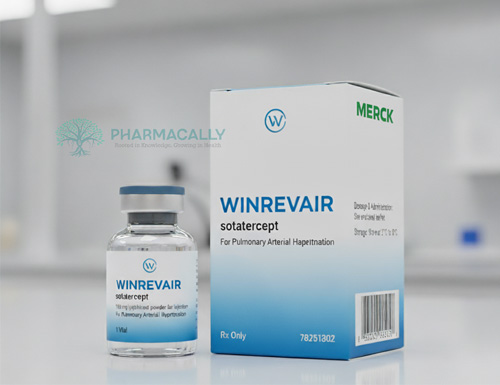
WINREVAIR, an activin signaling inhibitor, is FDA-approved for the treatment of adults with pulmonary arterial hypertension (PAH, WHO Group 1 pulmonary hypertension) to improve exercise capacity and WHO functional class (FC), and reduce the risk of clinical worsening events, including hospitalization for PAH, lung transplantation and death.
Today’s approval updates the WINREVAIR label to include efficacy and safety data from the HYPERION trial evaluating adults newly diagnosed with PAH (WHO FC II or III, diagnosed within 12 months of study screening) at intermediate to high risk of disease progression, providing insights into the role of WINREVAIR when added to background therapy within the first year of a PAH diagnosis.
In HYPERION (N=320; 160 WINREVAIR, 160 placebo), adding WINREVAIR to background therapy reduced the risk of clinical worsening events by 76% in adults with PAH WHO functional class II or III compared to placebo (hazard ratio [HR] 0.24; [95% confidence interval [CI], 0.14 to 0.41]; p<0.0001).
The primary composite endpoint, time to death or first confirmed morbidity event, included all-cause death, unplanned PAH-related hospitalization lasting ≥24 hours, atrial septostomy, lung transplantation or a decrease in 6-minute walk distance (6MWD) from baseline combined with at least one of the following: worsening of WHO FC, signs or symptoms of increased right heart failure, or addition or change of a background PAH therapy.
A first clinical worsening event occurred in 10.6% (17 of 160) of patients who received WINREVAIR and 36.9% of patients (59 of 160) who received placebo. The trial enrolled participants within their first year of diagnosis (mean time since PAH diagnosis was 7.2 months), with 72% of participants on double background therapy and 28% on triple background therapy; 17% of participants were on prostacyclin infusion therapy. The treatment effect was consistent across all prespecified subgroups (identified below) treated with WINREVAIR.
“The HYPERION study included people with PAH who closely reflect those we see in everyday clinical practice, including individuals who were recently diagnosed, older adults and people managing other health conditions,” said Dr. Vallerie McLaughlin,** Kim A Eagle MD Endowed Professor of Cardiovascular Medicine and Director, Pulmonary Hypertension Program, University of Michigan in Ann Arbor. “The results of HYPERION provide evidence for the use of WINREVAIR in adults diagnosed with PAH within the previous year who were receiving background therapy. The addition of these data to the U.S. product label provide meaningful information when making treatment decisions and reflect the evolving treatment landscape for PAH."
Additional safety information was included in this label update. WINREVAIR is contraindicated in patients with serious hypersensitivity (i.e., anaphylaxis, angioedema) to sotatercept-csrk or any of its excipients. Serious hypersensitivity reactions have been reported in WINREVAIR-treated patients. If a serious hypersensitivity reaction (including anaphylaxis and angioedema) occurs, discontinue WINREVAIR and institute appropriate emergency treatment. Inform patients of the signs and symptoms of hypersensitivity reactions and advise them to seek immediate medical attention if symptoms occur.
Healthcare providers should monitor hemoglobin and platelets before each dose of WINREVAIR for the first 5 doses, or longer if values are unstable, and periodically thereafter to determine if dose adjustments are required. WINREVAIR may increase hemoglobin and may lead to erythrocytosis, which if severe may increase the risk of thromboembolic events or hyperviscosity syndrome. WINREVAIR also may decrease platelet count and lead to severe thrombocytopenia, which may increase the risk of bleeding; thrombocytopenia occurred more frequently in patients also receiving prostacyclin infusion. Treatment should not be initiated if platelet count is <50,000/mm3. See additional Selected Safety Information below.
The adverse reactions observed in the HYPERION trial were generally consistent with those observed in the STELLAR trial. No severe reductions in platelet count <50,000/mm3 (<50.0 x 10⁹/L) occurred in the WINREVAIR group. The most common adverse reactions (≥10% for WINREVAIR and at least 5% more than placebo) in the HYPERION trial were epistaxis (31.9% versus 6.9%), telangiectasia (26.3% versus 11.3%) and increased hemoglobin (11.3% versus 1.3%). The median duration of exposure was longer in the WINREVAIR group (443 days) than in the placebo group (350 days). Treatment discontinuation due to an adverse event occurred in 3% (epistaxis was the most common reason) and 0% of the WINREVAIR and placebo groups, respectively.
Earlier this month, the European Respiratory Society (ERS) published clinical guidelines for the treatment of PAH. The ERS guidelines are the first formal clinical guidelines to include WINREVAIR, and the update was prompted by the current body of evidence for WINREVAIR in PAH so that clinical practice guidelines reflect the current treatment landscape. The ERS guidelines provide a “strong” recommendation for the use of WINREVAIR in adult patients with PAH on background therapy who have not achieved low-risk status at follow up, including patients at intermediate-low, intermediate-high, or high risk, and grade the certainty of evidence for WINREVAIR for this recommendation as “high,” out of four possible evidence scores (very low, low, moderate, or high).
Recommendations in the clinical practice guidelines were graded as “strong” (recommended) or “conditional” (suggested). WINREVAIR is the only add-on PAH therapy to receive a “strong” recommendation in these clinical practice guidelines.
“HYPERION is the third Phase 3 study of WINREVAIR in PAH and provides robust clinical evidence in adults with PAH when added to background therapy, including within the first year following a diagnosis,” said Dr. Joerg Koglin, senior vice president, head of general and specialty medicine, global clinical development, Merck Research Laboratories. “The totality of clinical evidence supporting the use of WINREVAIR to date continues to reinforce our confidence in its potential as a standard of care. Together, the clinical evidence reflected in the label as well as the updated treatment guidelines can provide meaningful information to support care decisions about the critical role WINREVAIR can play for a broad range of patients with PAH.”
About HYPERION
The HYPERION study (NCT04811092) was a global, double-blind, placebo-controlled clinical trial in which 320 adult participants with newly diagnosed PAH (WHO FC II or III, diagnosis within 12 months of study screening) at intermediate to high risk of disease progression were randomized in a 1:1 ratio to either WINREVAIR (target dose 0.7 mg/kg) (n=160) or placebo (n=160) administered subcutaneously once every 3 weeks. HYPERION was stopped early based on the positive results from the interim analysis of the ZENITH trial and a review of the totality of data from the WINREVAIR clinical program.
The median age of participants was 60 years (range: 18 to 88). In the study, 21% of participants were FC II and 79% were FC III. The most common PAH etiologies were idiopathic PAH (59%) and PAH associated with connective tissue diseases (CTD) (30%). The mean time since PAH diagnosis was 7.2 months. Participants were on background PAH treatment, 72% on double therapy and 28% on triple therapy; 17% of participants were on prostacyclin infusion therapy. The REVEAL Lite 2 risk score was <6 in 21% of participants, 6-7 in 51% of participants and ≥8% in 28% of participants, respectively.
The primary efficacy endpoint was time to first confirmed clinical worsening event (TTCW), defined as the time to death or the first confirmed morbidity event. The primary events included all-cause death, non-planned PAH worsening-related hospitalization of ≥24 hours, atrial septostomy, lung transplantation, and decrease in 6MWD from baseline combined with at least one of the following: worsening of WHO FC, signs or symptoms of increased right heart failure, or addition or change of a background PAH therapy.
Prespecified subgroups included age, sex, PAH subtype (idiopathic PAH, CTD-associated PAH), double versus triple background PAH therapy, WHO FC, prostacyclin infusion versus non prostacyclin infusion therapy, PVR, eGFR, REVEAL Lite 2 score, intermediate-low versus intermediate-high COMPERA 2 risk score. The first secondary endpoint was multicomponent improvement (MCI) as measured by the proportion of participants achieving all of the following at Week 24 relative to baseline: improvement in 6MWD (increase ≥30 m), improvement in NT-proBNP (decrease in NT-proBNP ≥30% or maintenance/achievement of NT-proBNP level <300 ng/L), and improvement in WHO FC or maintenance of WHO FC II.
About ZENITH
The ZENITH study (NCT04896008) was a Phase 3, global, double-blind, placebo-controlled, multicenter, parallel-group clinical trial in which 172 adult participants with PAH (WHO FC III or IV) at high risk of mortality were randomized in a 1:1 ratio to either WINREVAIR (target dose 0.7 mg/kg) (n=86) plus background PAH therapy or placebo (n=86) plus background PAH therapy administered subcutaneously once every 3 weeks.
About STELLAR
The STELLAR study (NCT04576988) was a Phase 3, global, double-blind, placebo-controlled, multicenter, parallel-group clinical trial in which 323 patients with PAH (WHO Group 1, FC II or III) were randomized 1:1 to WINREVAIR (target dose 0.7 mg/kg) (n=163) or placebo (n=160) plus stable background therapy administered subcutaneously once every 3 weeks.
About WINREVAIR™ (sotatercept-csrk) for injection, for subcutaneous use, 45 mg, 60 mg
WINREVAIR is FDA-approved for the treatment of adults with pulmonary arterial hypertension (PAH, WHO Group 1) to improve exercise capacity and WHO functional class (FC), and reduce the risk of clinical worsening events, including hospitalization for PAH, lung transplantation and death. WINREVAIR is the first activin signaling inhibitor therapy approved to treat PAH. WINREVAIR improves the balance between pro-proliferative and anti-proliferative signaling to modulate vascular proliferation. In preclinical models, WINREVAIR induced cellular changes that were associated with thinner vessel walls, partial reversal of right ventricular remodeling, and improved hemodynamics.
About Merck
At Merck, known as MSD outside of the United States and Canada, we are unified around our purpose: We use the power of leading-edge science to save and improve lives around the world. For more than 130 years, we have brought hope to humanity through the development of important medicines and vaccines. We aspire to be the premier research-intensive biopharmaceutical company in the world – and today, we are at the forefront of research to deliver innovative health solutions that advance the prevention and treatment of diseases in people and animals. We foster a diverse and inclusive global workforce and operate responsibly every day to enable a safe, sustainable and healthy future for all people and communities.
For more information, please visit www.merck.com