“The approval of DAYBU marks a significant milestone for the Rett syndrome community in the EU and advances our mission to bring this innovative treatment to patients and families who have long faced a profound unmet medical need,” said Catherine Owen Adams, Acadia’s Chief Executive Officer. “For people living with Rett syndrome, a devastating rare neurodevelopmental disorder, there have been no approved treatment options in the EU. We are proud to make DAYBU available and look forward to supporting patients, caregivers, and healthcare providers gain access to treatment."
The DAYBU marketing authorization in the EU is primarily based on results from the Phase 3 LAVENDER™ study, which demonstrated statistically significant and clinically meaningful improvements in core features of Rett syndrome, as measured by the Rett Syndrome Behaviour Questionnaire (RSBQ) and Clinical Global Impression-Improvement (CGI-I) scale co-primary endpoints.
“Rett syndrome places a profound burden on individuals, families, and caregivers, yet treatment options have remained extremely limited,” said Prof. Nadia Bahi, MD, PhD, Pediatric Neurology at Necker-Enfants Malades University Hospital, Paris Cité University, Paris, France. “Today's approval in the European Union is an important milestone that recognizes the significant unmet medical need in this rare disease. It provides clinicians with a new treatment option to help address the neurobehavioral symptoms of Rett syndrome and represents progress for the Rett community.”
With this approval, DAYBU is authorized to be marketed in all 27 EU member states, as well as Iceland, Liechtenstein, and Norway. As a next step, Acadia will now begin pricing and reimbursement negotiations with relevant national authorities to potentially bring DAYBU to patients across the EU.
About Rett Syndrome
Rett syndrome is a rare, complex, neurodevelopmental disorder and occurs in approximately one of every 10,000 to 15,000 female births worldwide.1-3 A child with Rett syndrome generally exhibits an early period of apparently normal development until six to 18 months, when many of their skills seem to slow down or stagnate. This is typically followed by a regression phase when the child loses acquired communication skills and purposeful hand use. The child may then experience a plateau period in which they could show mild recovery in cognitive interests, but body movements remain severely diminished. As they age, those individuals living with Rett may continue to experience a stage of motor deterioration, which can last the rest of the patient’s life.2 Rett syndrome is typically caused by a genetic mutation on the MECP2 gene.4 In preclinical studies, deficiency in MeCP2 function is thought to lead to impairment in synaptic communication and brain plasticity, and the deficits in synaptic function may be associated with Rett manifestations.4-6
Symptoms of Rett syndrome may also include development of hand stereotypies, such as hand wringing and clapping, and gait abnormalities.7 Most individuals living with Rett syndrome typically live into adulthood and require intense round-the-clock care.
About DAYBU® (trofinetide)
In Rett syndrome, levels of insulin-like growth factor 1 (IGF-1) in the brain are lower than normal, which is thought to affect nerve function. IGF-1 is a hormone that is important for the normal development and functioning of the nervous system. The active substance in DAYBU (trofinetide), is made up of a molecule derived from IGF-1.
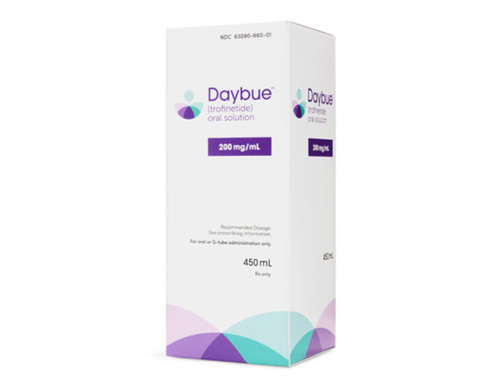
Trofinetide is approved for use under the name DAYBUE® and DAYBUE®STIX in the United States and under the name DAYBUE® in Canada and DAYBU® in the European Union.
About Acadia Pharmaceuticals
Acadia is committed to turning scientific promise into meaningful innovation that makes the difference for underserved neurological and rare disease communities around the world. Our commercial portfolio includes the first and only FDA-approved treatments for Parkinson’s disease psychosis and Rett syndrome. We are developing the next wave of therapeutic advancements with a robust and diverse pipeline that includes mid- to late-stage programs in Alzheimer’s disease psychosis and Lewy body dementia psychosis, along with earlier-stage programs that address other underserved patient needs. At Acadia, we’re here to be their difference.
For more information, please visit www.acadia.com